What Separates a Nightclub Install From a Bar PA
A bar PA plays music at conversation-friendly levels. A nightclub sound system reproduces full-range dance music at high sound pressure levels for six or eight hours straight, every weekend, without strain and without failures. That difference shows up in every part of the design, and it is why a club sound system installation is a production project, not a speaker purchase.
SPL and coverage design
The dancefloor needs to be loud, even, and clean. That means the loudspeakers are chosen and aimed so the level is consistent across the floor rather than blasting the front row and fading at the back. Just as important, coverage design controls where the energy does not go: the bar, the entry, and the seating areas should sit noticeably quieter so staff can hear orders and guests can talk. Getting that contrast right is a design exercise, not a volume knob.
Subwoofer arrays
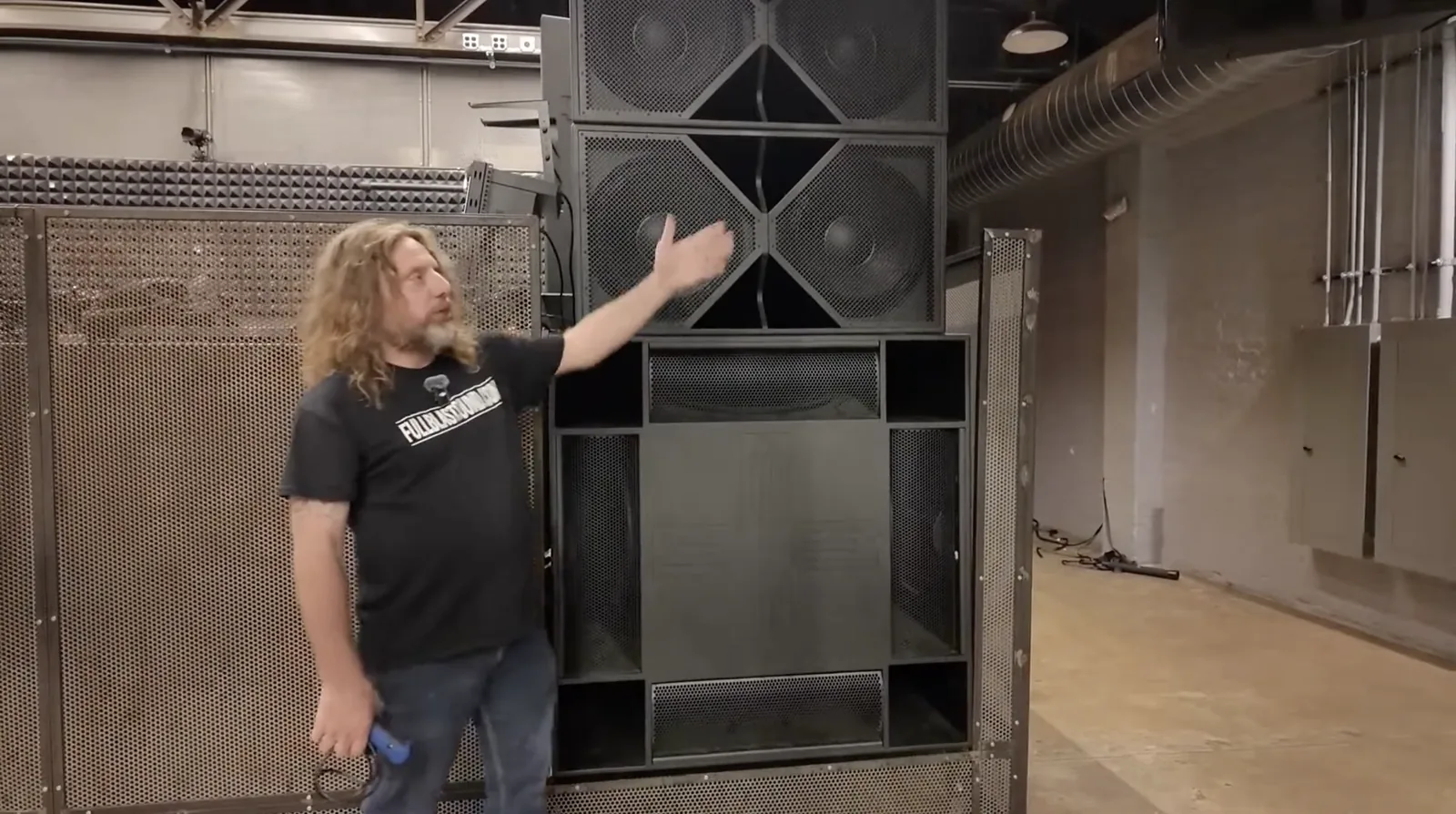
Low end is the product in a dance venue, and single subwoofers scattered around a room fight each other. A proper install places subs as an array, so the cabinets couple and reinforce instead of cancelling, and so the bass energy is steered onto the dancefloor rather than into the DJ booth, the bar, or the neighbors. Placement, spacing, and processing decisions here have more effect on how the room feels than almost anything else in the system.
Acoustic treatment considerations
Most club spaces start as hard boxes: concrete, glass, and drywall. Untreated, those surfaces smear the low end and turn vocals into mush at high SPL. During design we look at what the room itself is doing, where reflections and resonances will fight the system, and where treatment or layout changes will pay off. A modest system in a controlled room routinely sounds better than an expensive system in a raw one.
DJ booth monitoring
The DJ works in the one spot where the main system does not aim, so the booth gets its own monitor system: enough clean level for the performer to mix confidently, on its own level control, without forcing the mains up. Touring DJs judge a venue by the booth first. A club that books serious talent needs booth monitoring treated as part of the main design, not an afterthought.
Multi-zone routing for patios and VIP rooms
Patios, VIP rooms, smoking areas, and restrooms each need their own feed and their own level. A multi-zone control system lets the patio run the main room mix at a lower level, lets a VIP room switch to its own source for a buyout, and lets staff adjust any of it from a simple interface instead of a rack of processors. We build these control racks on Symetrix and Ashly NXP platforms; see our FBS zone control page for how that works.
Lighting and video integration
A nightclub production installation plans sound, lighting, and video together. Power, rigging points, cable paths, and control all overlap, and coordinating them in one design avoids the classic mess of three contractors mounting gear on top of each other. Fullblast designs, supplies, and installs lighting and LED video alongside the audio, so the whole room runs as one system.
The difference between a bar PA and a club system is not volume. It is designed coverage, sub arrays that couple instead of cancel, a booth the DJ trusts, and zones the staff can actually control.
How the Nightclub Installation Process Works
Every project runs through the same sequence, whether it is a single-room club or a multi-room venue.
- Walkthrough. We visit the space, measure it, look at power, rigging, and acoustics, and talk through the format, the music, and the capacity you are building for.
- Design. We lay out loudspeaker positions, sub array placement, booth monitoring, zones, lighting, and video as one coordinated system.
- Quote. You get a written, itemized quote, usually the same business day. The quote form asks for your zip code so the number comes back tax inclusive.
- Install. Our crew mounts, wires, and commissions the system, scheduled around your operating calendar so you lose as few open nights as possible.
- Tuning. We measure and tune the finished system in the room, set zone levels and limiters, and train your staff on the controls before opening night.
Nightclub Installs We Have Built
Fullblast Sound designs, supplies, and installs complete AV systems for nightclubs and venues from our base in San Antonio, TX, across Texas and nationwide. Recent club projects include:
- A flagship EDM nightclub: a full production build with the main system, sub arrays, lighting, and video designed as one room.
- An after-hours nightclub: a system built to run hard deep into the night, with coverage control to keep the energy on the floor.
- A multi-room arcade nightclub in San Antonio: independent zones per room with central control.
- A downtown high-energy nightclub: high-SPL dancefloor coverage with quieter bar and seating zones.
The full portfolio, with photos and system notes for each room, is on our installs page.
Equipment Options: HSD, Meyer Sound, and BASSBOSS Open Box
We are an authorized dealer for several loudspeaker lines, which means the design is not forced toward one brand. Three lines cover most club projects.
HSD Sound Systems: horn-loaded output per dollar
HSD builds horn-loaded systems by hand in Massachusetts, and Fullblast is one of three authorized US dealers. Horn loading delivers high output from fewer boxes, which suits clubs that want serious impact on a defined budget. HSD gear is also documented by HSD in festival use, including large outdoor events, so it is proven at club SPL and beyond. Published retail prices:
| Model | Type | Price |
|---|---|---|
| Sherman | 24-inch flagship subwoofer (one Sherman equals two Battleaxes, per HSD) | $10,600 |
| Battleaxe | 21-inch FLH subwoofer, usable output down to 25 Hz | $7,100 |
| Warhammer | Dual-18 FLH subwoofer | $7,100 |
| Tomahawk | Horn-loaded cabinet, about 100 lb lighter than the Battleaxe | $6,100 |
| Haymaker | 3-way top | $8,500 |
| Uppercut | Horn-loaded cabinet | $5,400 |
The full line, including the Battlehawk, Switchback, and Eagle, is on our HSD page.
Meyer Sound: the reference install
For venues that want the system to be part of the venue's reputation, Meyer Sound builds self-powered loudspeakers in Berkeley, California, used on major world tours and in permanent venue installs. The install-focused range includes ULTRA-X point source boxes, LFC low-frequency control elements, and Galileo GALAXY processing, alongside touring line arrays like LEOPARD. Fullblast is an authorized Meyer Sound dealer and currently has open-box LEOPARD stock from a Metallica tour system. Meyer pricing is quoted per project, so call us for numbers.
BASSBOSS open box: powered bass on a budget
Our BASSBOSS open box inventory is final dealer stock with free shipping and limited quantities, and it is a practical way to put serious powered subwoofers in a club for less. Current open box pricing includes the VS21 at $4,745 each, the SSP218 at $5,396, and the ZV28 at $5,396. Quantities are limited, so check availability when you quote the project.
Financing a Nightclub Sound System Installation
Most club builds are financed, because the system starts earning on opening weekend while the payments spread across years. Through our commercial financing partner, business financing starts at $5,000 with a one-page application and no application fee. Credit decisions come back in 24 to 48 hours, the partner reports a 94% approval ratio, A through D credit is welcome, and startups may qualify. 100% financing programs exist, the first payment can be deferred 60 to 90 days, and installation labor, software, and soft costs can be bundled into the lease. Terms run 12 to 72 months, up to 84 on some programs.
With a first payment deferrable 60 to 90 days, a financed club system can be open and selling tickets before the first payment is due.
Section 179 may also apply: for the 2026 tax year the deduction limit is $2,560,000 with 100% bonus depreciation available, and financed equipment placed in service by December 31 can qualify. Details are on our commercial sound system financing guide and finance page.
Financing figures reported by our commercial financing partner; approval is not guaranteed. Section 179 figures are for the 2026 tax year per section179.org. This is general information, not tax advice. Consult your tax advisor.
Frequently asked questions
What does AV installation for night clubs include?
A complete AV installation for night clubs covers the main sound system, subwoofer arrays, DJ booth equipment and monitoring, multi-zone audio for patios and VIP rooms, lighting, LED video, and the control system that ties it together. Fullblast Sound designs, supplies, and installs all of it as one project, so the sound, lighting, and video are planned together instead of bolted on separately.
How much does a club sound system installation cost?
It depends on room size, SPL targets, zone count, and the loudspeaker line you choose, so we do not publish flat install pricing. Published component prices give a starting reference: HSD cabinets run from $5,200 to $10,600 each at published retail, and BASSBOSS open box inventory starts lower. The honest answer comes from a walkthrough and a written quote, which we usually turn around the same business day.
Can I finance a nightclub sound system installation?
Yes. Business financing through our commercial financing partner starts at $5,000 with a one-page application, no application fee, credit decisions in 24 to 48 hours, and a reported 94% approval ratio with A through D credit welcome. Installation labor, software, and soft costs can be bundled into the lease. Figures are reported by the financing partner and approval is not guaranteed.
Do you handle lighting and video as part of a nightclub production installation?
Yes. Fullblast Sound designs, supplies, and installs complete AV systems for nightclubs: sound, lighting, LED video walls and ceilings, and multi-zone control. Planning them as one production installation means power, rigging, signal, and control are coordinated from the start, which is cheaper and cleaner than adding lighting or video after the audio is already in.